

How to test paint and finish samples at home
Test paint and finish samples in your room's daylight and evening lighting, alongside retained surfaces, before recording the chosen product and finish.
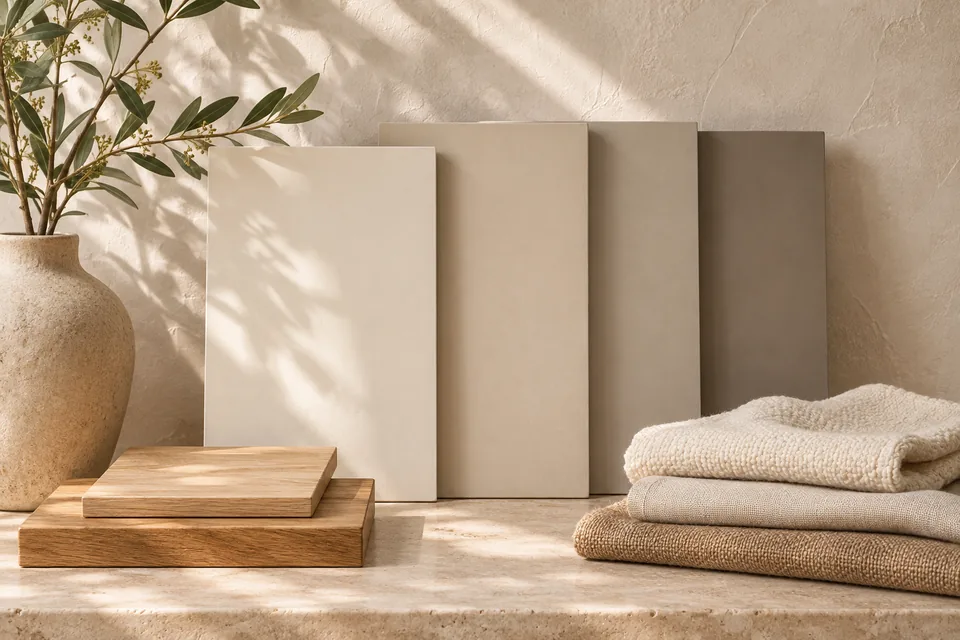
Test a small group of finishes together in the room where they will be used. Compare them during daylight and again with the lights you normally use in the evening. Start with the permanent surfaces, then choose the paint and accents that sit well beside them.
Use the surfaces you are keeping as anchors
Identify any floor, countertop, doors or furniture that will stay. Place samples next to those surfaces and notice which colours they bring out in each other. If the flooring stays through the renovation, start there instead of building the palette around a paint swatch you saw in another room.
Use Compare the approved render with physical samples if you are working from a visual proposal.
Set up a small palette you can compare
Choose a few realistic candidates and put them next to a fixed finish such as the floor or a countertop. Label each sample clearly so you can still identify it after moving it around. Include the proposed fabric or timber if it will sit close to the painted area. Separate finish decisions by room when the light or surrounding surfaces differ.
For a living room with a warm floor and pale curtains, compare paint options beside the window first. Then move the same samples to the opposite wall. Hold the sample upright and look at it from the entrance and sofa. A colour that works on the bright wall may feel heavier elsewhere.
Set up samples in their real positions
Hold wall colours vertically and place flooring samples flat. Move the set between the brightest part of the room and a shaded corner. For paint, ask for a sample applied to a suitable prepared surface in the intended sheen. Look at the area from your normal seat and from the entrance as well as close up.
Check the evening scene and the surface finish
Return to the samples after dark with the room lighting you expect to use. Test how the paint looks beside the selected upholstery or joinery. If the lighting itself will change, discuss the proposed fittings before approving a colour that depends on a particular effect.
Ask the supplier or painter how the sample relates to the final product, sheen and preparation. For a surface that gets touched often, discuss how you will clean and maintain it. Evaluate appearance and maintenance separately. A finish can suit the palette while needing a different care routine from the one your household expects.
Test the palette in both lighting conditions
In a hypothetical apartment, two warm whites may look similar in daylight and noticeably different beside the joinery in the evening. Compare them together with the timber, tile and fabric you intend to keep. Use the proposed lights where available. Keep notes on what you see in person, since a phone camera may shift the appearance.
Record the choice room by room
Keep a schedule that names the room, surface, product, colour reference and sheen or finish. Attach a photo for identification and keep the physical sample where possible. If you are using similar colours in several rooms, label the samples with the intended location so they do not get mixed up on site.
Ask the team to confirm what happens if an approved material is unavailable or the existing surface needs additional preparation. Review proposed substitutions alongside the original palette in the actual room. Keep the latest approved schedule with the person ordering the finish and the team applying it.
Discuss preparation, sheen and care when you review Painting and finishes.
Record the chosen finish and check how to care for it
Save the product or sample reference, colour and finish for each location. Ask the supplier for care guidance where the surface will be touched or cleaned frequently. Photograph the approved set for identification and keep the physical samples for comparison during the work. Bring photos of the existing room and the finishes you plan to keep when you discuss the palette with the Interior team.
Keep the comparison conditions consistent
Place the shortlisted samples beside the floor, joinery or stone that will remain. Review them in their intended orientation and at the times the room is normally used. Compare alternatives under the same conditions so a change in light is not mistaken for a change in the material.
Record the product, finish, sample reference and room location once a decision is made. Ask the supplier for substrate preparation and care information for the chosen system. Keep an approved reference available when the delivered material is checked.
Should I select wall paint from a phone photograph of a sample?
Use photographs to record options, not to establish an exact colour match. Review the physical sample in the room because the camera, screen and lighting can all alter the appearance.
Discuss your project
Bring your retained finishes and shortlisted samples to discuss a coordinated interior palette. You can discuss your project with Shri Aarambh Interior.